The Great British Sewing Bee


Magazine pattern sheet, 1860

I was a consultant for the Great British Sewing Bee on BBC2, talking about early dressmaking patterns. Although we know these were on sale from the 1860s, very few tissue paper originals survive. It’s even difficult to find copies of the magazines that advertised them – but those I have seen in the British Library and elsewhere suggest that there was a real demand for patterns, with several British companies selling them in the 1870s. What do survive are pattern sheets published as part of magazines such as The Englishwoman’s Domestic Magazine. These are frighteningly complex, with up to twenty different patterns printed on the same sheet using different types of lines. The dressmaker had to trace off the pieces, adjust them to the right size, and add seam allowances before cutting out. The magazines also advertised tissue paper patterns, cut to the correct size and tacked together to show the shape.  One wonders how many magazine readers tried these patterns once and vowed to leave dressmaking to the professionals after that…

 http://www.bbc.co.uk/programmes/p0165nv7

'Marie Antoinette' fichu to be made from the pattern sheet

Posted in Uncategorized | 8 Comments

Slogan t-shirts – ‘This is what a feminist looks like’

'Ladies Sewing Circle' t-shirt puchased in New York, 1981

Recently I attended the launch for Stephanie Talbot’s book, Slogan T-Shirts, Cult and Culture. It was a starry event, with fashion designers rubbing shoulders with journalists, bloggers and DJs. The book itself is a fascinating examination of the different meanings of slogan t-shirts, with contributions from designers, retailers and collectors as well as academics like myself. My contribution was an interview about the meanings and ethics of the currently popular ‘Barbie is a bitch’ t-shirt – it was really thought-provoking to unravel the different points of view on this slogan. Stephanie and I also discussed the ‘This is What a Feminist Looks Like’ t-shirt, and how its meaning changes depending on who is wearing it. I was pleased to see this t-shirt photographed on a variety of different wearers in the finished book. I was also interested to see -in the chapter by the designer Dr Noki – a different version of a t-shirt I have had for years but rarely worn because its slogan is so liable to misinterpretation: ‘Ladies’ Sewing Circle and Terrorist Society’. http://www.bloomsbury.com/uk/slogan-t-shirts-9781408157541/

Posted in Uncategorized | Leave a comment

Light and colour

1903 lampshade panel for Hill House, Helensburgh (V&A T.66-1953)
At the darkest time of year, it’s interesting to think about how much of a luxury artificial lighting was until the late nineteenth century, and the way that different forms of  lighting affected fashionable dress and interiors. Candles, oil lamps and gas lights all create a golden glow which would make medium-toned fabrics look richer. The flicker of candles would highlight surface trimmings – and jewellery of course. The electric bulbs introduced from the 1880s gave a clearer light which was thought to be unflatteringly harsh for women’s complexions (given that makeup was not normally worn). However they allowed subtle pastel shades – especially pale yellow – to be more widely used. ‘Electroliers’ presented designers with new opportunities, inluding the use of fabric shades rather than the non-flammable glass globes used for gas. Charles Rennie Mackintosh’s stark all-white interiors were softened by textiles designed by his wife Margaret Macdonald – including lampshades  with delicate applique and beaded braid.
Posted in Uncategorized | 3 Comments

Margaine Lacroix and the dresses that shocked Paris

An exhibition at Westminster Reference Library, on until 30th November, highlights the work of the forgotten couturier Margaine Lacroix. Research by Dr Sue Ralph of Bath Spa University has shown that this designer was experimenting with draped construction and corsetless shaping by 1908. Because her dresses followed the lines of conventional fashion, unlike the chemises and pantaloons of the radical Paul Poiret, they have been largely overlooked by history. But this made them even more shocking in some ways –  a belle-epoque dress so tight that it showed the wearer’s navel was challenging fashion on its own ground, rather than setting up an alternative style.

http://www.westminster.gov.uk/services/libraries/news/wrfexhibitions/

Posted in Uncategorized | Leave a comment

Textiles in Florence

Casa dei Tessuti, Florence

At the Costume Colloquium in Florence there were fascinating presentatations by curators and researchers from all over the world, sharing their new discoveries. There were special visits to museums new and old: the Palazzo Davanzati, with its recreated medieval interiors and its study room with examples of fine lace is an old favourite, and I was impressed by the new Museo Gucci, with state-of-the-art displays showcasing items from the firm’s archive. The Museo del Tessuto in Prato was also impressive, with its explanations of the different fibres and processes that are used to make textiles. But unsurprisingly one of the best aspects of the event was being in Florence, where there are fine textiles to be seen in shops throughout the city. Two favourites were the beautiful silks and wools at the Casa dei Tessuti, via dei’ Pecori, where the proprietor and the shop are the embodiment of refinement, and the vintage garments and accessories at Ill Cancello, via dei Fossi which included 1960s garments crocheted from straw!

I’ve set up a Textile Tour to Florence for October 2013, through St James’ Travel – information and booking forms are here:

http://www.stjamesarttours.co.uk/art_tours/tour_details.asp?tid=137

1960s fashion in straw at il Cancello

Posted in Uncategorized | 4 Comments

Royal School of Needlework

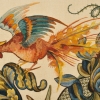
A bird worked in crewel work from the RSN collection

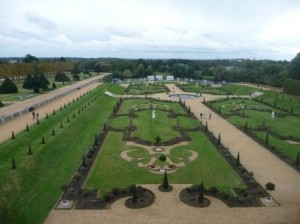
I have recently been appointed as Lecturer in Contextual Studies at the Royal School of Needlework. This is a fascinating institution, founded in 1872 in order to teach traditional skills in hand embroidery including Stumpwork and Goldwork. The setting at Hampton Court Palace is inspiring me to think about the interaction between fashion, textiles, architecture – and gardens- in new ways.

Formal Gardens at Hampton Court

Posted in Uncategorized | Leave a comment

Sindy Dolls and models of womanhood

'Tressy' doll as Air Hostess, c1965

A recent news story about the proposed sale of the Sindy doll brand brings up some relevant issues about young girls’ role models. As a child in the 1960s it was clear to me that Sindy and Barbie represented different ‘lifestyles’, and that Sindy’s was more achievable. But it wasn’t only based on British and American views of what girls wanted – the British Tressy doll was marketed as a tool to help girls learn about grooming, and had a figure similar to Barbie’s. Her wardrobe included a very aspirational Air Hostess outfit, complete with BOAC badge. That these dolls do say something about our culture was confirmed when I took my 8-year-old son shopping for presents for his younger sister and he homed in on a doll that came dressed as a vet, complete with horse: ‘Let’s buy this one so she can learn that girls don’t just grow up to be princesses’. How could I refuse?

http://www.bbc.co.uk/news/business-18669793

Posted in Uncategorized | Tagged | Leave a comment

The Songs of Milne on Radio 4

My uncle aged 5, 1925

I was interviewed by the pianist John Kember for a Radio 4 programme (aired 19 June 2012) about the songs made from AA Milne’s children’s verses by the composer Harold Fraser-Simpson. This was a thought-provoking exercise which got me pondering how much cultural ‘icons’ really impinge on individuals’ experience. My mother, born as Milne’s books were being published, had also heard the songs growing up but didn’t feel they were central to her childhood; not in the same way as the popular songs enjoyed by adults. Perhaps they form part of the class of artefacts designed for children rather than chosen by them and not satisfying either adult or child tastes. Perhaps their appeal is founded on reminiscence of past childhoods rather than observation of current ones, so they they need to be slightly out of date in order to be effective. We should be wary of assuming that because a work was first published in a given year it represents the culture of that year and would be recognised by people who had lived through the period. http://www.bbc.co.uk/programmes/b01jwk3f

Posted in Uncategorized | Tagged , , , , , | Leave a comment

Inside Outing at the Rivoli Ballroom

I gave a presentation on Dance Floor Fashions at a V&A event, ‘Inside Outing: Ballrooms’ yesterday, which prompted some reflections on the interaction between music, fashion and culture. Researching the talk, I was struck by the openness of British culture to new musical ideas from unexpected places. Not only were blues and jazz records brought in by American servicemen and sailors from the 1940s onwards, there were dance clubs where you could keep up with the Cuban steps like the mambo. It was also striking how quickly fashions in dances changed – the cha-cha-cha was new and sexy in the early 1950s but by the 1960s had been tamed for ballroom dancing competitions. Dances also depended on fashion for their effect – the hip movements of the mambo were emphasized by tight skirts, and doing the twist made any skirt a mini. Venues like the Rivoli Ballroom, which has vintage dance nights, give us a chance to see how fashion, dance and music from a specific period interact. 

www.therivoli.co.uk/

Posted in Uncategorized | Tagged , , , , , , | Leave a comment

Historic Olympics in Advertising

Novelties in athletic costumes, Lloyd Attree & Smith, 1894. Copy 1 111/80, TNA

The National Archives in London has created a webpage to showcase the records it holds of Olympics past and present. I was delighted to see an image gallery that includes many of the advertising documents I have studied in the Stationers’ Hall / Copy 1 archive. These show that attempts to recruit national events for commercial gain were well known in 1900. They also provide some interesting insights into the way that sports were perceived in the past. Pastimes like punting, which seem to us tame and genteel, are presented as modern and titillating – especially when a young lady and gentleman are alone on the river. More importantly, participating in these pastimes could be used to drive sales of specialist clothing or generalised ‘leisure wear’. It takes a stretch of the imagination, but Edwardian tennis whites are probably the ancestor of today’s tracksuit….

http://www.nationalarchives.gov.uk/olympics/timeline.htm

Posted in Uncategorized | Tagged , , , , , , , | Leave a comment