
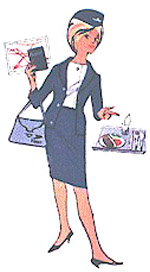
'Tressy' doll as Air Hostess, c1965
A recent news story about the proposed sale of the Sindy doll brand brings up some relevant issues about young girls’ role models. As a child in the 1960s it was clear to me that Sindy and Barbie represented different ‘lifestyles’, and that Sindy’s was more achievable. But it wasn’t only based on British and American views of what girls wanted – the British Tressy doll was marketed as a tool to help girls learn about grooming, and had a figure similar to Barbie’s. Her wardrobe included a very aspirational Air Hostess outfit, complete with BOAC badge. That these dolls do say something about our culture was confirmed when I took my 8-year-old son shopping for presents for his younger sister and he homed in on a doll that came dressed as a vet, complete with horse: ‘Let’s buy this one so she can learn that girls don’t just grow up to be princesses’. How could I refuse?