100 Years of Woman’s Weekly

I was interviewed on the Today programme on Radio 4 on 4th November as part of a feature marking the centenary of Woman’s Weekly magazine. The publishers have reissued the first ever edition, and it is fascinating; it has articles to appeal to mothers of families and to young ‘working girls’, including careers advice, instructions in home dressmaking, and quick and cheap recipes. The difficulties of women’s lives are hinted at by the advertisements for cures for hernias and for general ‘low health’; these might have been placebos, or based on alcohol, but in 1911 most women couldn’t afford to see a qualified doctor so had to rely on patent medicines. There were many similar magazines in 1911, read by thousands of women who commuted in to work by train or tram, as well as at mothers of families. The most successful responded closely to their readers’ interests. Others aimed to promote a political or moral agenda – like the Suffrage magazines Common Cause and Votes for Women. Sisters magazine, founded in 1895, seems to have been aimed at both middle-class and working women, but sank without trace.
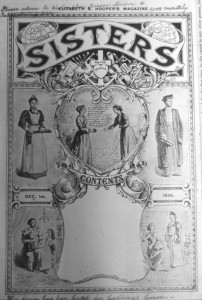
Cover artwork for 'Sisters' magazine, 1895
Posted in Uncategorized | Leave a comment

19th Century British Olympics – sporting and theatrical

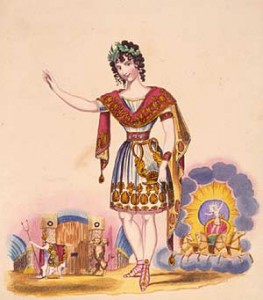
At the launch yesterday for Martin Polley’s book, The British Olympics, which uncovers fascinating information about the idea of the Olympics in Britain before 1900. There were several ‘Olympic’ games with competitions in traditional British pastimes like shin-kicking as well as the more elevated running and jousting – one of them, in Much Wenlock, continues today. There were also many commercial entertainments that used the word ‘Olympic’ to suggest something more elevated than scantily-clad dancers and equestrian acrobats. In the 1830s, the Olympic Theatre, London was famous for its musical extravaganzas (including some based on Classical legends such as Orpheus), co-ordinated by the first woman actor-manager in London, Eliza Vestris. Madame Vestris was an acclaimed opera singer, premiering several roles by Weber and Rossini, and performing Cherubino in Mozart’s ‘marriage of Figaro’. She was also a noted dancer who was not shy of showing off her famously shapely legs in short skirts or in the tunics and tights of male roles. Her stage shows were feats of physical skill, but perhaps not the kind that de Coubertin envisaged…

http://www.playedinbritain.co.uk/books/the-british-olympics.php

Madame Vestris as Orpheus, 1831

Posted in Uncategorized | Leave a comment

All Work and Low Pay: The Story of Women and Work

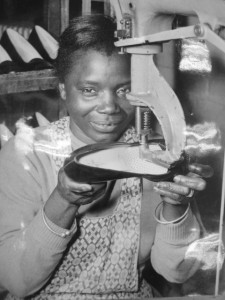
Mrs Irene Henry, shoe factory worker, Leyton, 1957

I’ve been working on this exhibition for the last six months, uncovering fascinating documents in The Women’s Library and the TUC archives. Some are unbelievably sad, like the records of the young women poisoned by working with toxic materials. Some are very funny, like the satirical verses in the 1929 textile strikers’ songbook. Some are just amazing glimpses of a world of work that most of us will never know – like the portraits of workers in the Co-Operative Wholesale Society’s shoe factory, taken in 1957. Where are these young women now, I wonder?

Posted in Uncategorized | Leave a comment

Politics of Appearance: 1970s Feminists

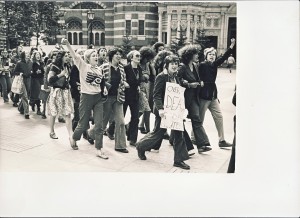
I was speaking at the Women’s History Network conference at the Women’s Library, London, on my research project on the 1970s feminist dress codes. Several of the people I’d interviewed were in the audience, as were others who were active in feminism at that time. There was some discussion about the differences between American and British feminists – the women I interviewed felt that British activists were less ‘hard-line’ in their approach to clothes. Dress practices were also affected by economic realities – women who were trying to make a living in an unsympathetic environment had to be careful not to antagonise employers by wearing garments deemed ‘provocative’ – like knee-length culottes.

Feminists on an Abortion Rights march in London, 1977

http://www.londonmet.ac.uk/thewomenslibrary/aboutthecollections/research/politicsofappearance.cfm

Posted in Uncategorized | Leave a comment

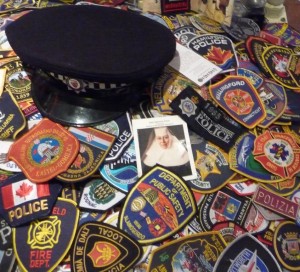
St Paul’s Church 9/11 Memorial

Earlier this year we visited St Paul’s Church, the unofficial centre for the emergency services workers on the Twin Towers site after 9/11. It was extraordinary to see how people had come together to support the workers, and the way this support was represented by material offerings: soft toys, banners, blankets. Most moving for me was the collection of identity badges donated by the different rescue workers. These spanned the globe, including some from Hampshire that might have been donated by my neighbours the firemen. St Pauls seems to welcome its new role as a memorial site, although this cannot always be easy for its priests and parishioners. The transformation of the church shows how important the process of public memorialisation is at times of public trauma.

Posted in Uncategorized | 2 Comments

Trans National Clothing conference

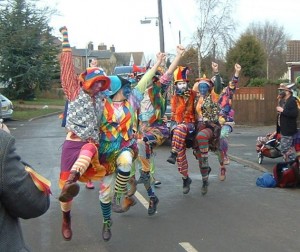
Gog Magog Molly dance team

At the Trans National Clothing conference which I’m co-organizing at Bath Spa University with Jo Turney. Have heard some really interesting papers on topics ranging from Norwegian wool sweaters to indie fashion and rock in Indonesia. Have swapped ideas and stories with delegates from around the world. Great discussion this morning of the similarities between Cosplay in Japan and China and the dress codes of British folk dance groups like Gog Magog Molly.

Posted in Uncategorized | Leave a comment

Dressing for Success – on the radio

Just been interviewed by Ted Robbins of BBC Radio Lancashire about changing dress codes in the workplace. I had a chance to flag up the exhibition I’m working on for The Women’s Library and the TUC Library, London – All Work and Low Pay. More on the exhibition later. Meanwhile here is the link to Ted Robbins, valid until August 2:

http://www.bbc.co.uk/programmes/p00hzbl8

Posted in Uncategorized | Leave a comment

Off to the ball!

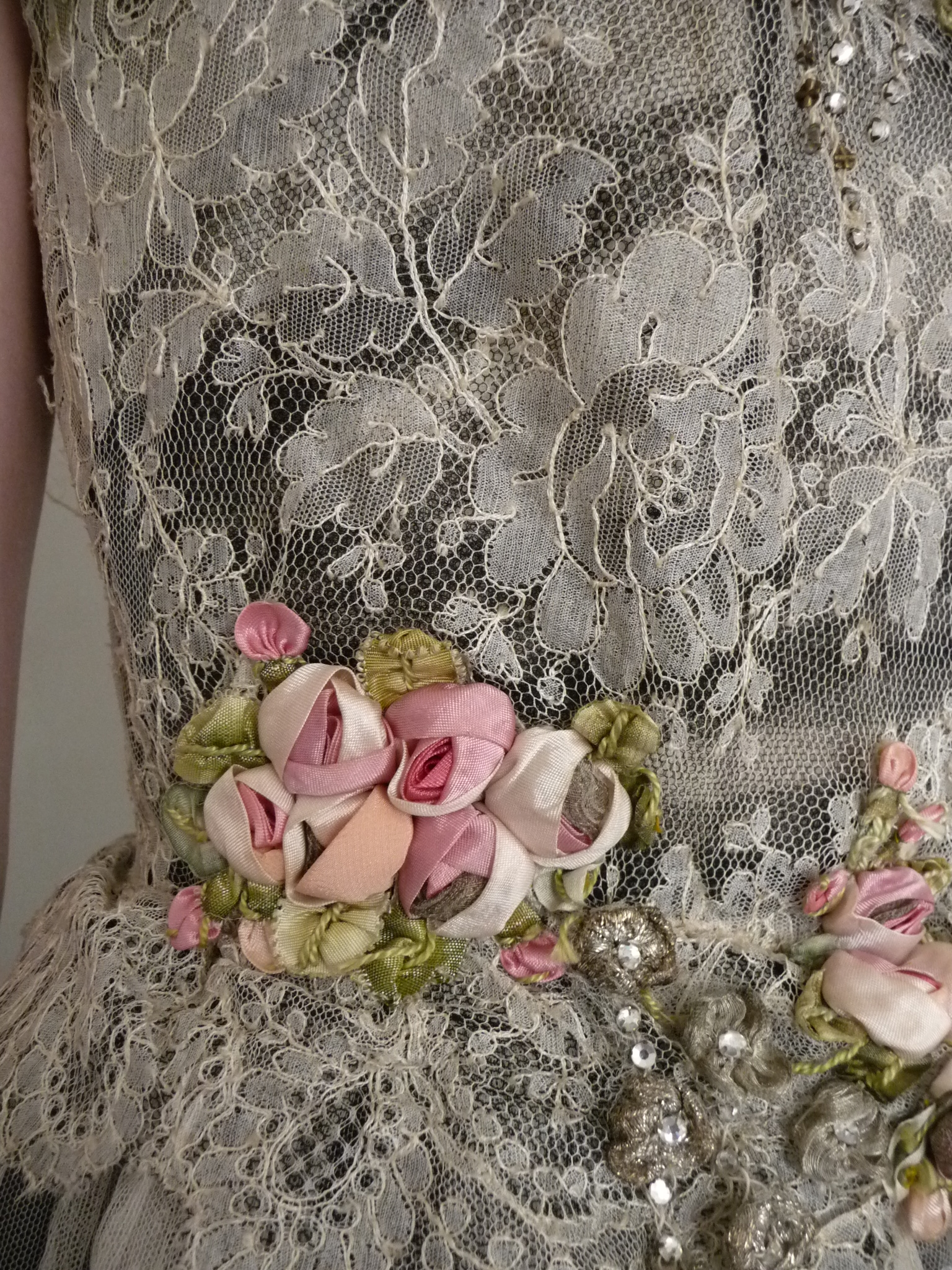
My daughter went to her friend’s 6th form leavers’ ball last weekend in a dress made from parts of a Boue Soeurs 1920s ‘robe de style’, remodelled around 1960 – and taken in by her mother. The bodice has machine-made chantilly lace in silk layered over black and white tulle – the skirt is more prosaic cotton chantilly – with silk ribbon rosebuds. Tres jeune fille, as they used to say….

Posted in Uncategorized | Leave a comment

Article on patchwork at the Great Exhibition

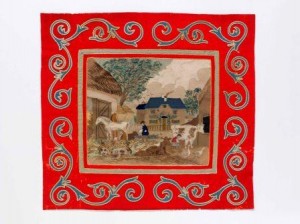
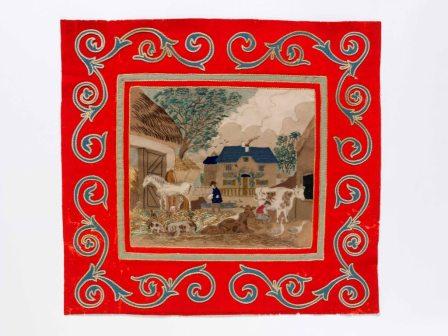
Intarsia patchwork panel of a farmyard scene, V&A AP27-1917

My article, A patchwork panel ‘shown at the Great Exhibition’, has just gone up on the V&A Online Magazine. It takes a small textile in the V&A collections as the starting point for an exploration of working peoples’ cultural lives, and the practice of exhibiting ‘rarities’ for money, in the years between 1830 and 1860. This research uncovered links between patchwork, Temperance and the fight for voting rights. It also showed that while the Great Exhibition of 1851 brought together working people and the middle classes, this meeting was not always harmonious, with middle-class commentators deriding the tastelessness of goods designed by workers. Finally, it introduced me to some fascinating characters such as John Brayshaw the Lancaster tailor, John Monro the tailor and Temperance lecturer, and Stephen Stokes the Inspector in the Irish Police – all of whom made pictorial patchworks!

http://www.vam.ac.uk/content/journals/research-journal/issue-03/a-patchwork-panel-shown-at-the-great-exhibition/

Posted in Uncategorized | Leave a comment

Show and Tell of Vintage treasures

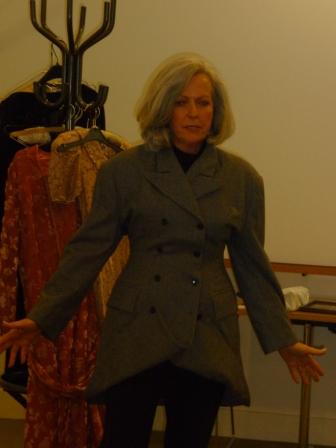
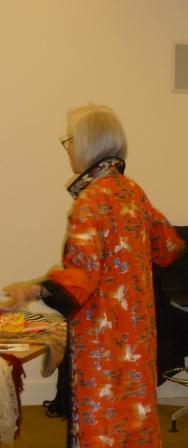
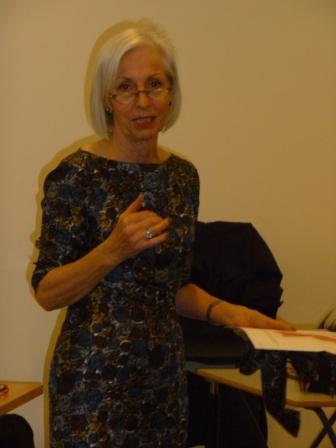
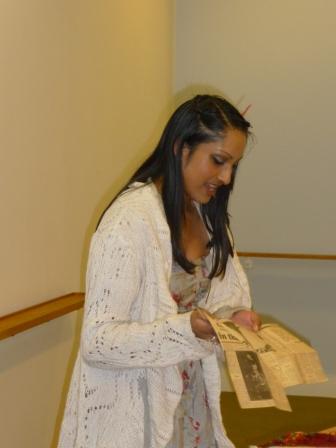
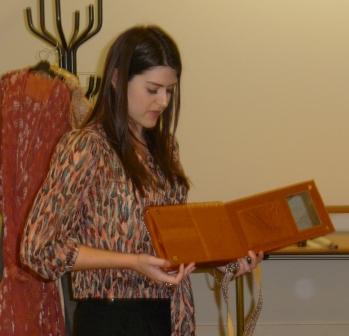
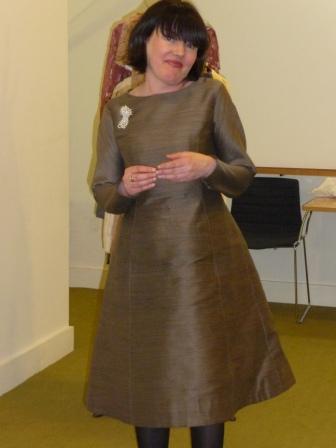
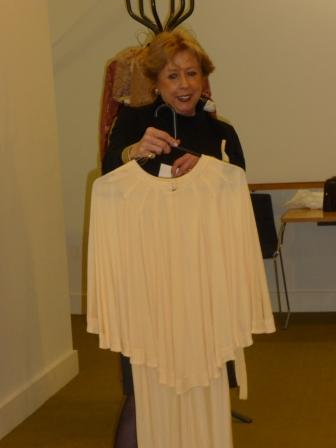
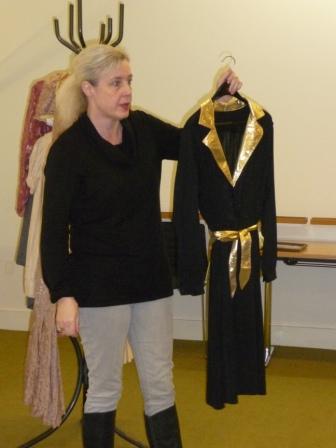
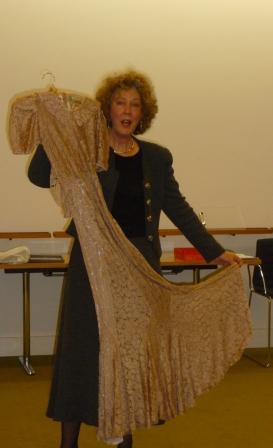
Forthe last evening of Vintage to Vogue, the group members brought their own treasures to show us. There were some beautiful pieces and some wonderful stories including survival in Leningrad, relatives who supported the family by dressmaking, and several weddings. Here are a selection of pictures.

Posted in Uncategorized | Leave a comment